EDIT:
This post is edited 4/22/26 to reflect updated information on the pest. The initial Identification of a sawfly larvae was incorrect. The UM Extension Entomology team has ID’d this pest as Large Necklace Moth (Hypsoropha monilis) larvae. This is a native insect in Missouri and is a voracious eater. Controls are wait until they are gone, physical removal, or BT treatment. As my tree is now fully denuded, there is no reason to do anything except give the tree some tender loving care and let it recover. More information can be found here.
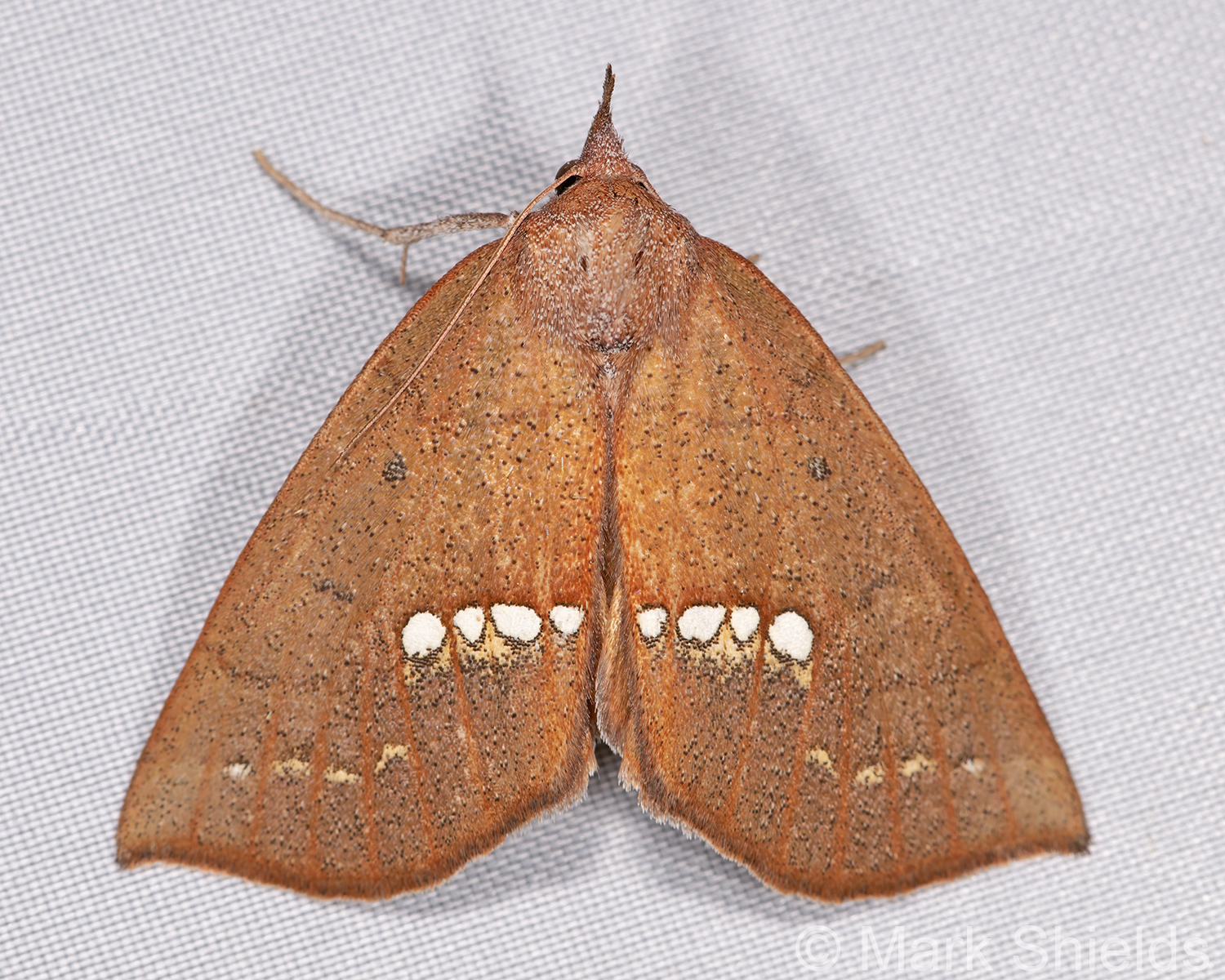
I have a pest on my persimmon tree. That pest is the native Large Necklace Moth who’s larvae feed on persimmons. They are voracious eaters and can completely denude a young tree in a matter of a few days. This is what the adult looks like. (Continue reading to see the larvae).
I have Large Necklace Moth larvae denuding a persimmon tree. Saturday, the 18th I noticed some serious damage to a native male persimmon tree on the property. This would have begun on Friday night. On inspection, I found one worm in the foliage of the tree. This is what it looked like then.
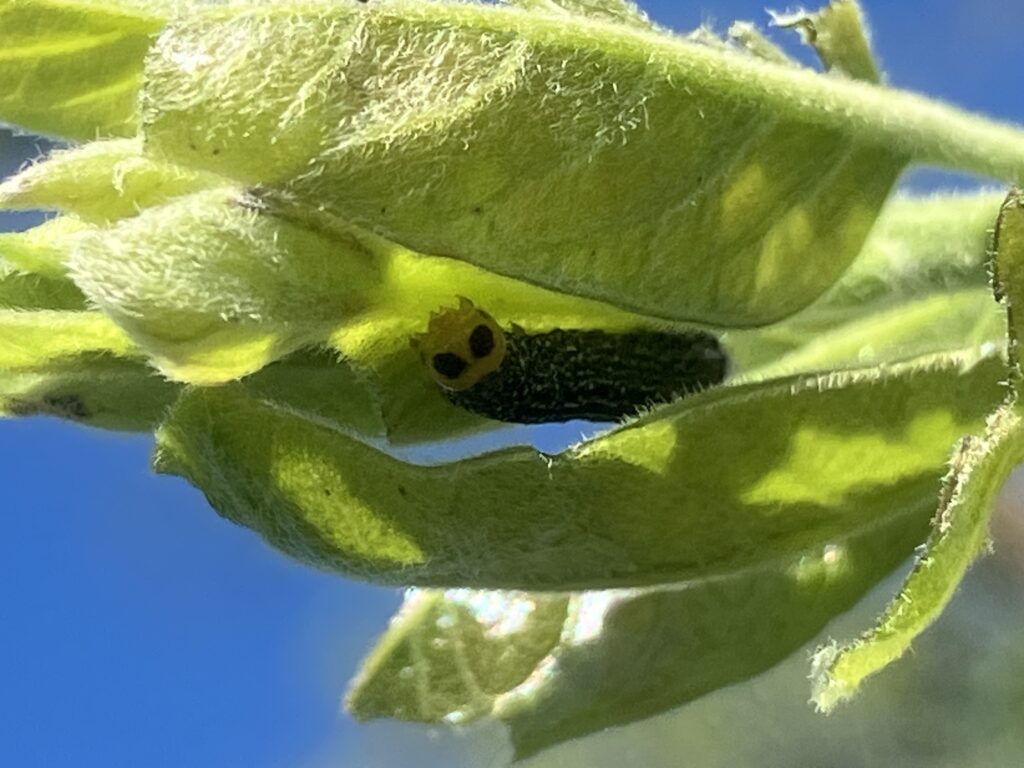
Notice the bright yellow head, mottled yellow spots on the body, and those wonderful, what I will call, mutton chops. Add the black eye spots and this thing looks gruesome and mean! The head of these larvae turn orange a day later, then darken quickly.
On Sunday, I estimated 50% denuding of the tree, but no worms on it. So, Sunday night, I went out after dark and found the worms again. Using a flashlight, and checking on the underside of the tree, I saw the tree was covered in these critters. I was able to take this photo.
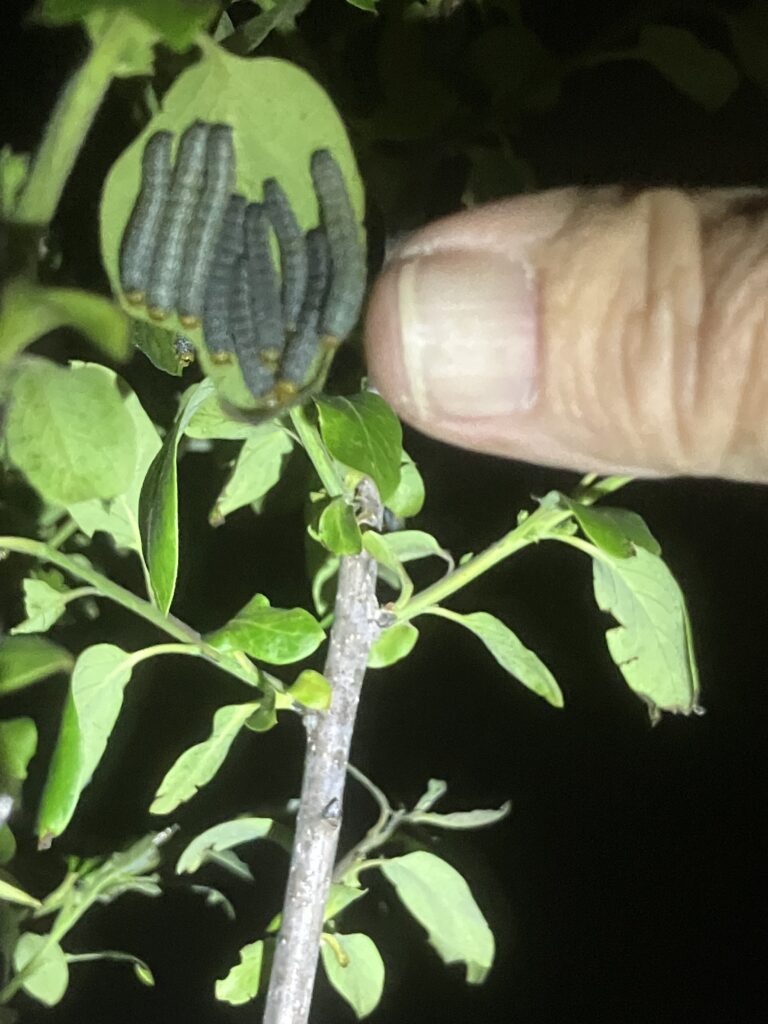
I find it interesting how they are all oriented head away from the limb of the tree. Also, you see their heads have changed color since 36 hours ago. I collected some of these worms and took them on Monday to my County Extension office for help identifying them, and to see what suggested control measures there are.
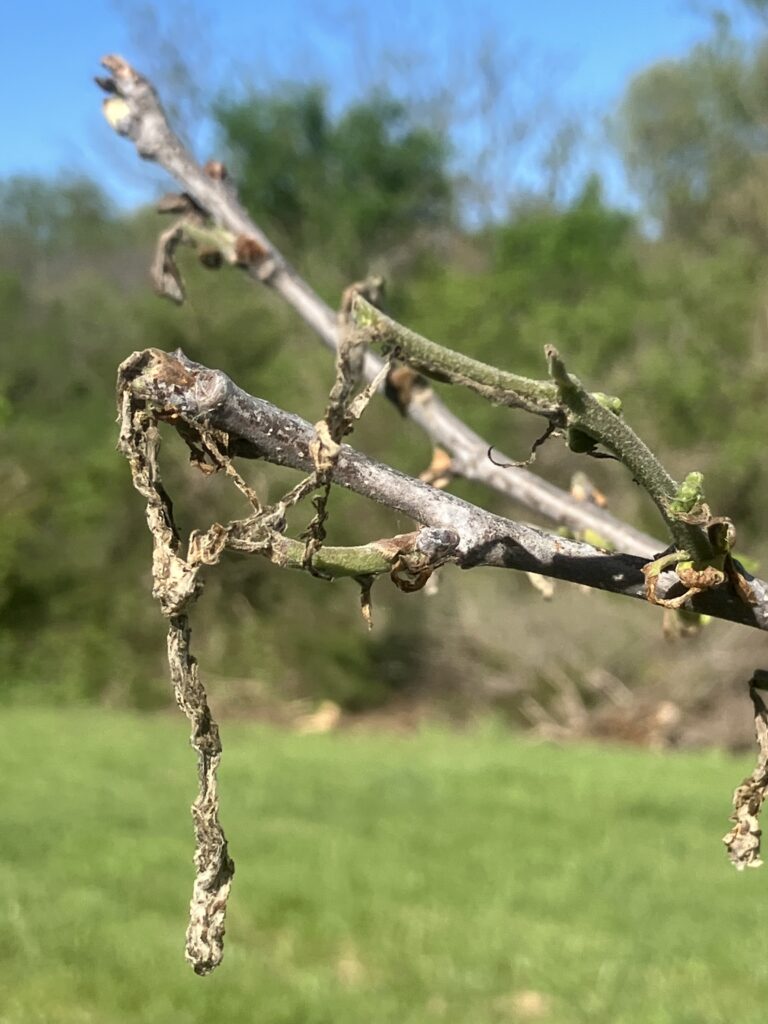
I took these pictures of the damage I found on Saturday. Everything they have chewed on is this springs growth. No older wood has been damaged.
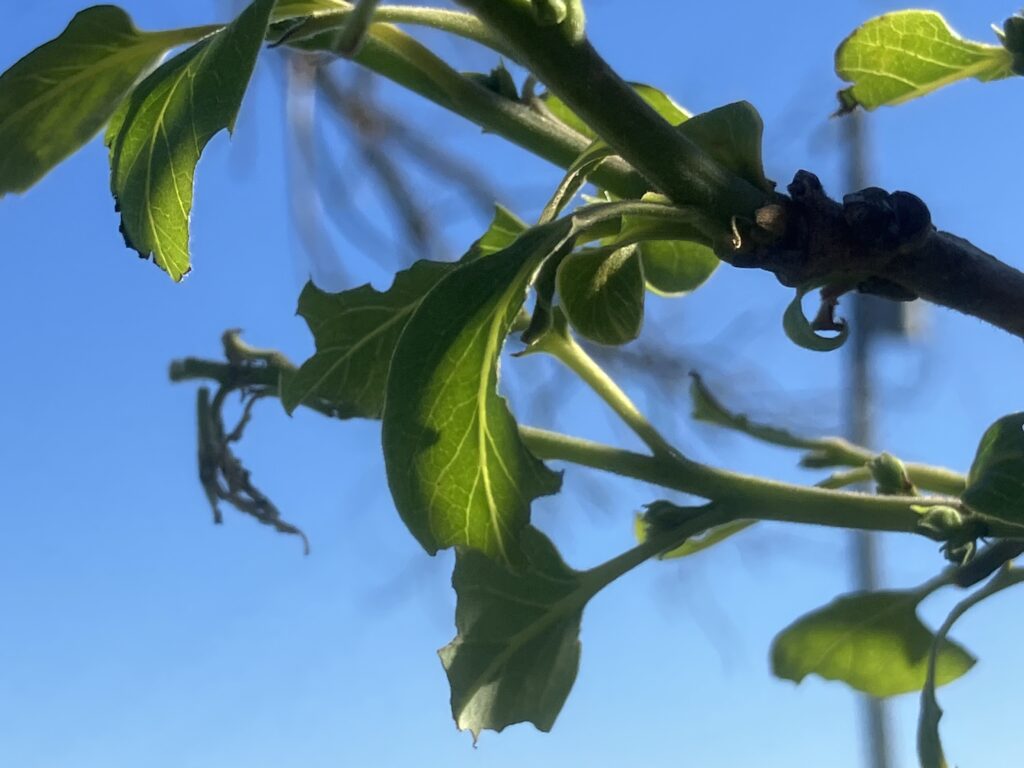
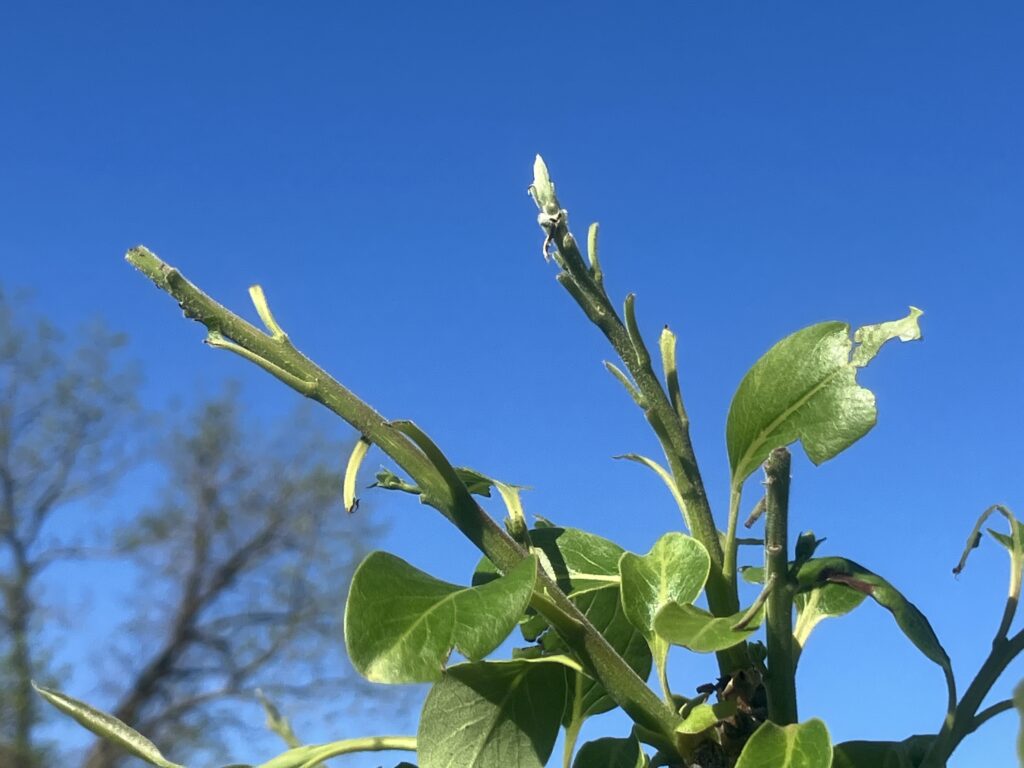
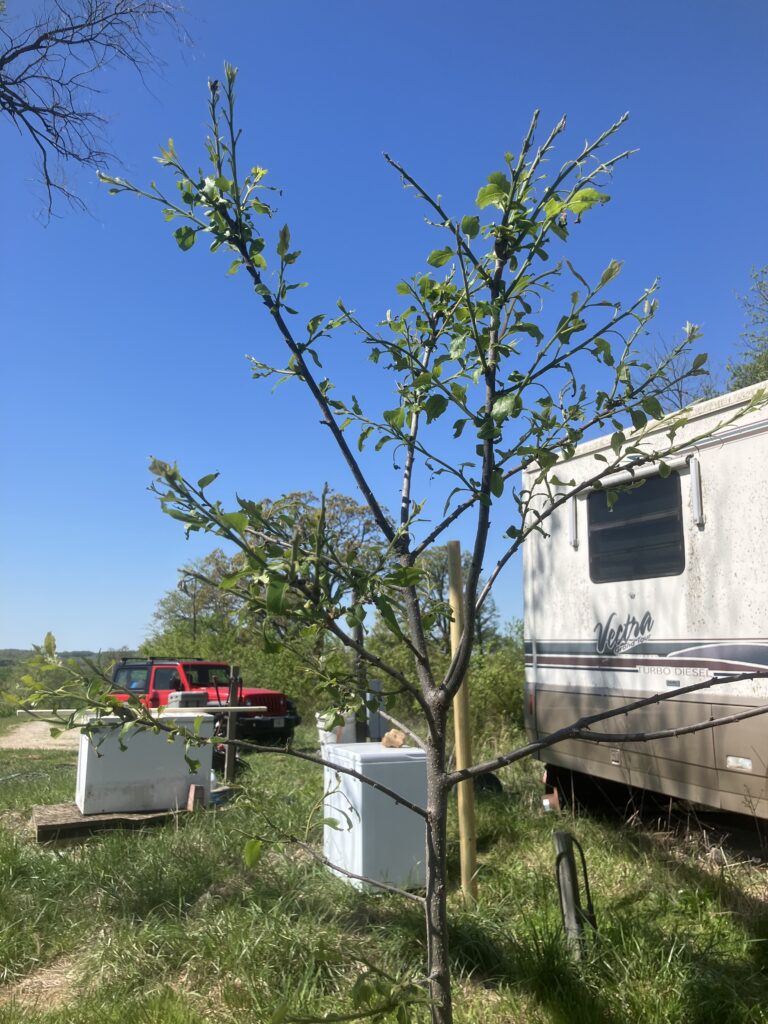
On Monday night, I had the opportunity to go out after dark to see what was happening. It was about 9:30pm, CDT (UTC-5). I found one worm in the foliage, and a number of them crawling up the trunk of the tree. They must find “safe harbor” in the grass below, or, probably less likely, in the soil. Now, today, Tuesday, my persimmon tree is completely denuded.
I did observe a wasp yesterday afternoon searching the tree. It was looking on all the branches, and inspecting under the leaves that still remained. I wonder if it was able to sense the pheromones from the worms and was looking for a host for it’s eggs. Here is a picture of that wasp.
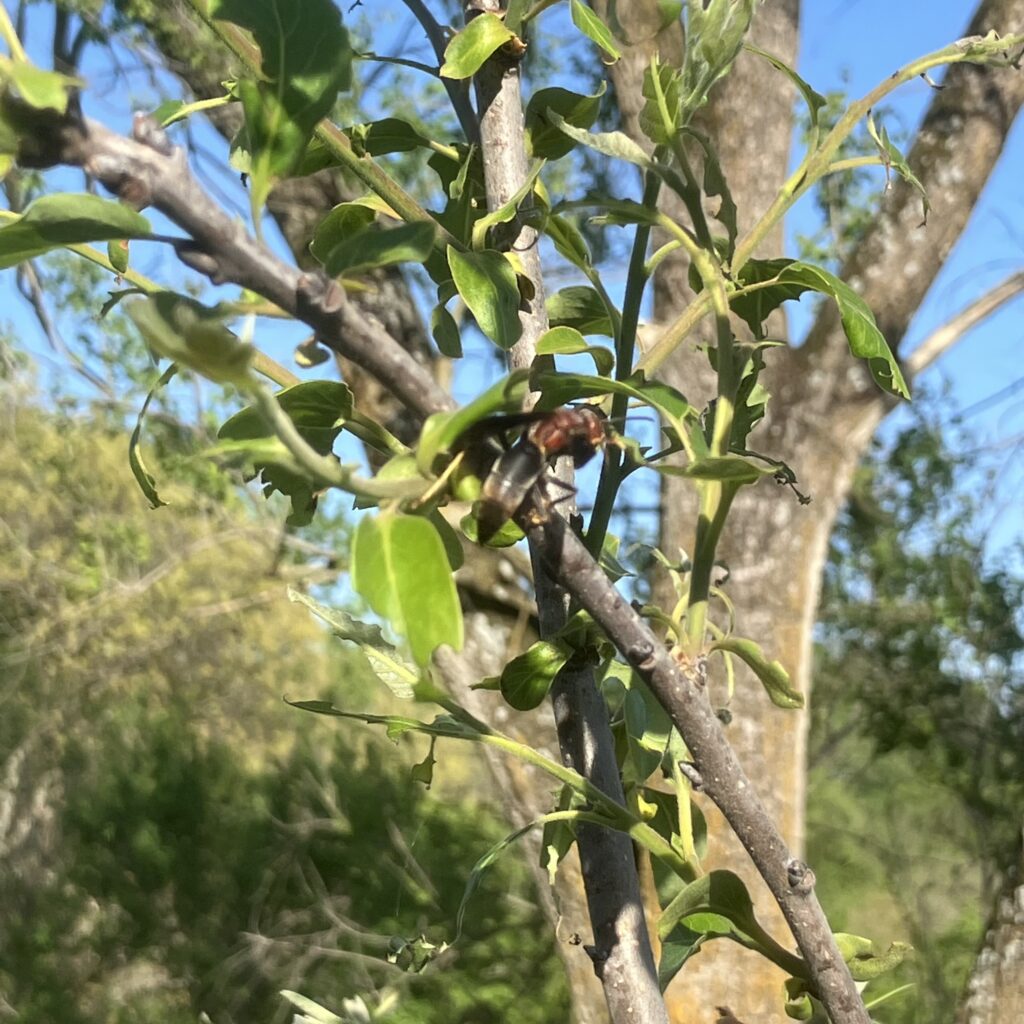
I will update this post with any additional information I obtain. So, stay tuned for a few days while the Missouri State entomology team works out what they find. I should hopefully have a specific identification soon, and any suggested control measures they can provide.
Please note: this is a male persimmon tree. Thus, it does not produce fruit. So, in this case, at least I don’t have to concern myself with pesticide use on a food chain produce. Always, always, always, follow the label for pesticides, fungicides, and herbicides. And, always, use the appropriate protective gear as prescribed by the chemical manufacturer. It keeps you alive and the environment safe.
Mike